
Chip or Crack? How to Know if Your Windshield Needs Repair or Replacement
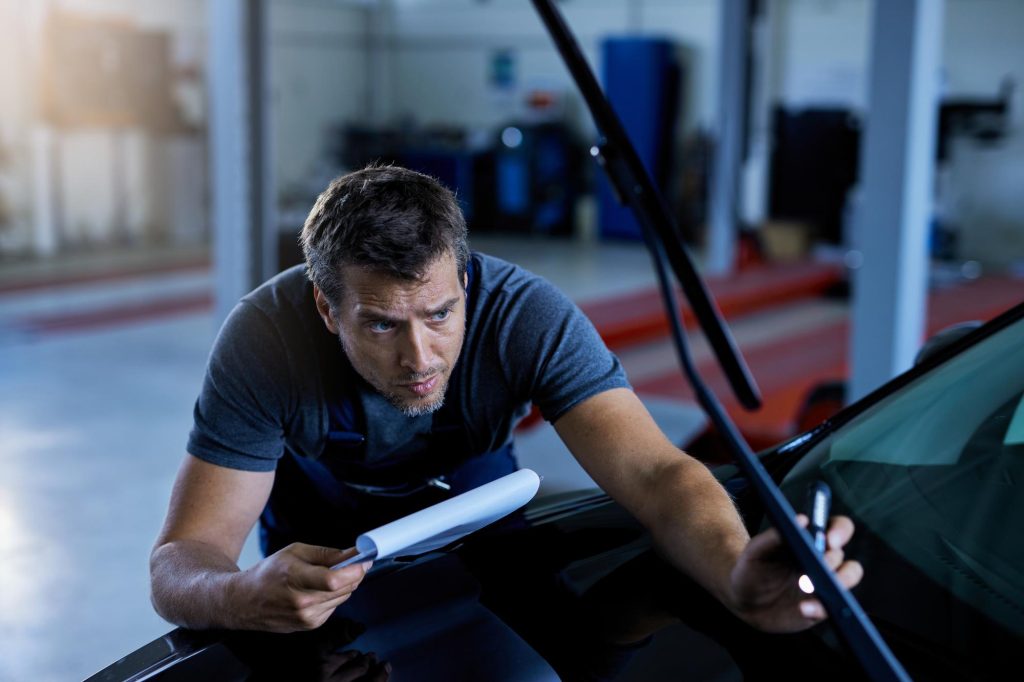
A tiny star from a gravel ping. A hairline streak crawling across the glass after a cold night. A bullseye that seemed harmless until it wasn’t. If you drive in the GTA, you’ve probably seen all of the above. The question that matters is simple: do you need a quick repair, or is a full windshield replacement the safer call? Choosing correctly protects visibility, structural integrity, airbag performance, and—on newer vehicles—advanced driver-assistance systems.
This comprehensive guide from Auto Glass 360 explains how professionals evaluate damage, when a shop-quality repair is appropriate, when windshield replacement is non-negotiable, what costs and timelines to expect, and how ADAS calibration, insurance, and materials quality affect the decision. We’ll also show you how our team performs precision work, documents it for your records, and backs it with workmanship guarantees—so you can drive away with confidence whether you need a minor fix or a full windshield replacement.
What’s Really at Stake When Glass is Damaged
Your windshield is safety equipment
It’s not just a view out; it’s a structural member that helps support the roof in a rollover and a backstop for passenger-side airbag deployment. It also provides the optical clarity you rely on in rain, glare, and at night. Making the right call between repair and windshield replacement is therefore about safety first, convenience second.
One variable can change the whole answer
Two chips that look similar at a glance can require completely different solutions based on size, depth, location, and crack behavior. A careful, methodical assessment keeps you from over-paying—or under-protecting—when windshield replacement might be essential.
How Professionals Decide: The Four Pillars of Assessment
Size, Location, Depth, and Type
A technician’s recommendation on repair vs windshield replacement comes down to four fundamentals.
Size
Most single-impact chips around the size of a loonie, and tight cracks under ~6 inches, are good candidates for repair. Once cracks run longer or start branching, windshield replacement becomes more likely.
Location
Damage near the glass edge experiences higher stresses and spreads faster. Flaws in the driver’s primary sight zone are visually distracting even after a quality repair. Either factor can push the decision toward windshield replacement.
Depth
Windshields are laminated: two glass layers bonded by a PVB interlayer. If the impact penetrates beyond the outer layer or into the interlayer/inner lite, windshield replacement is often the safer choice.
Type
- Bullseye: usually repairable if compact and clean
- Star break: repairable if legs are short and contained
- Combination: case-by-case
- Long linear crack: commonly requires windshield replacement, especially if near an edge
When Repair Makes Sense (and When It Doesn’t)
Green-Light Scenarios for Repair
If the chip is small, clean, away from the edges, and not in your primary sight zone—and it hasn’t absorbed dirt or moisture—repair is often a fast, durable, and economical fix. It preserves your factory seal and reduces the chance you’ll ever need windshield replacement for that impact.
What a proper repair accomplishes
- Stabilizes the fracture network so it won’t spread
- Restores clarity dramatically (a faint blemish may remain at certain angles)
- Avoids disturbing trim, moldings, and electronics—unlike windshield replacement
Red Flags That Point to Replacement
Some damage patterns simply exceed safe repair guidelines:
- A crack longer than ~6 inches or one that’s branching rapidly
- Edge damage or cracks intersecting the frit band (black border)
- Penetration into the interlayer or visible “white haze” contamination
- Distortion squarely in the driver’s sight line that a repair can’t clear
- Damage where ADAS camera optics would remain distorted without windshield replacement
When we recommend windshield replacement, it’s because returning the glass to OEM-intended safety and optical performance is the only way to keep you protected.
ADAS: Why Technology Can Force the Decision
Cameras, calibration, and your choice
Many late-model vehicles mount a forward-facing camera at the top centre of the windshield. If the glass is replaced, the camera’s view and bracket position can shift by millimetres—enough to change how your car “sees” lane lines, vehicles, and signs. That’s why windshield replacement on ADAS-equipped vehicles must be followed by precise calibration (static, dynamic, or both) to restore manufacturer-specified aiming.
Can repair avoid calibration?
Often, yes. If the damage is small and not in the camera’s optical path, a high-quality repair preserves alignment and prevents the need for calibration. If a full windshield replacement is required, however, calibration isn’t optional—it’s essential to proper ADAS performance.
Learn more about vehicle safety concepts and standards from Canadian authorities:
Government of Ontario – Vehicle Safety
Transport Canada – Vehicle Safety Standards
Cost, Time, and Insurance: What to Expect
Typical timelines
- Repair: usually 30–45 minutes on-site; you can often drive immediately afterward.
- Windshield replacement: typically 2–3 hours end-to-end, including safe drive-away time and, if required, ADAS calibration.
Costs and coverage
Many comprehensive policies fully or largely cover repair because it prevents bigger claims. Windshield replacement is also commonly covered but may involve a deductible and required calibration on ADAS vehicles. Auto Glass 360 helps verify coverage, secures approvals, and provides documentation for your records.
Materials and Parts Quality: Where Outcomes Are Won
What matters most to safety and clarity
Whether you land on repair or windshield replacement, quality materials and processes make the difference:
For repair
- Optical-grade resins matched by viscosity and refractive index
- Proper vacuum/pressure cycles to fill micro-fractures
- UV curing for durable bonding and improved optics
For windshield replacement
- Feature-matched glass (coatings, acoustic interlayer, tint band, HUD compatibility)
- Correct camera bracket placement when ADAS is present
- OE-grade adhesives with documented cure times and bead geometry
- Pre- and post-calibration scans when required
Windshield replacement done with the wrong part or incomplete procedures can lead to wind noise, leaks, poor optics, or erratic driver-assistance behavior. Done right, it restores the safety envelope your vehicle was engineered to deliver.
Mobile vs In-Bay: Where the Work Happens
Mobile convenience, no shortcuts
Many repairs—even some windshield replacement jobs—can be completed on your driveway or at your workplace when conditions allow. The key is environmental control: temperature, wind, lighting, and surface levelness affect adhesive curing and calibration accuracy. When conditions aren’t ideal, we’ll advise in-bay service to protect quality.
The Auto Glass 360 Process, Step by Step
If you’re a candidate for repair
- Damage assessment using the four pillars
- Drying and cleaning to remove moisture/debris
- Vacuum/pressure resin injection to fill micro-fractures
- UV cure to stabilize
- Polish and verify optics and stability
- Document the repair for your records/insurer
If you need windshield replacement
- Protect and prep: fenders, dash, and cowl covered; sensors documented
- Remove old glass and safely strip old urethane
- Pinch-weld treatment: clean, prime, and address corrosion
- Apply OE-grade adhesive to correct bead height and profile
- Place feature-matched glass and seat to spec
- Transfer sensors/brackets correctly
- Calibrate ADAS (static/dynamic/dual) when required
- Post-scan and road-test to verify systems
- Provide documentation of work and calibration results
Each step supports a safe, durable windshield replacement—and a quieter, clearer drive.
14 Moments to Act Fast (and Avoid a Bigger Fix)
- A tiny star appears after following a gravel truck.
- You notice a short line growing day-to-day.
- The chip sits near the edge (high-stress zone).
- Night glare has increased around the blemish.
- You’re due for a long highway trip.
- A cold-to-hot defroster blast makes the mark spread.
- The car just passed a rough pothole section.
- You see white haze (moisture/dirt) in the chip.
- You plan to sell or appraise the vehicle soon.
- A safety inspection is coming up.
- You rely heavily on ADAS features.
- Wiper chatter keeps stuttering over the chip.
- You park outdoors in extreme temperatures.
- You’ve already had one small crack turn into two.
In most of these cases, quick action—repair or windshield replacement, as appropriate—saves money and preserves safety systems.
Why Choose Auto Glass 360
Safety-first, documentation-rich service
At Auto Glass 360, your glass is treated as safety equipment. We use OEM-style procedures whether you need a quick fix or full windshield replacement:
- Honest triage so you don’t replace glass that can be safely repaired—and you don’t “repair” damage that really needs windshield replacement
- Optical-grade resins for better clarity when repair is indicated
- Feature-matched glass when windshield replacement is required (coatings, acoustic layer, tint band, HUD compatibility)
- OE-grade adhesives with documented drive-away times
- ADAS calibration per OEM method with pre/post scans and a printed report
- Mobile or in-bay options depending on conditions and your vehicle
- Insurance coordination so approvals and claims are straightforward
- Workmanship guarantee on both repair and windshield replacement
Our promise is simple: the right fix, done the right way, with the paperwork to prove it.
Care Tips to Prevent the Next Crack
Small habits, big difference
- Replace wiper blades every 6–12 months to avoid scratching
- Keep safe distances behind gravel or construction vehicles
- Warm the cabin gradually on freezing mornings
- Clean the glass inside and out—especially the camera’s view area
- Schedule service quickly; timely repair can prevent windshield replacement
Choose Once, Drive Confidently
A chip or hairline streak doesn’t have to derail your week—or your budget. With the right evaluation, you’ll know whether a precision repair will stabilize the damage or whether a safe windshield replacement is the only way to restore structure and optics. Auto Glass 360 handles both with factory-level care, from feature-matched parts to ADAS calibration and insurer-ready documentation. That’s how we turn uncertainty into confidence—every time.
Have damage now? Book your inspection with Auto Glass 360. We’ll walk you through repair vs windshield replacement, complete the work to OEM standards, and send you back on the road with crystal-clear assurance.
Frequently Asked Questions
1) How do I quickly tell if I need repair or windshield replacement?
If the chip is loonie-sized, away from the edge and your main sight zone, repair often works. Long or branching cracks, edge damage, or deep penetration typically require windshield replacement. A technician should confirm after a close inspection.
2) Will a repair be invisible, or should I plan for windshield replacement to get perfect optics?
Repairs dramatically improve clarity and stop spreading, but a faint blemish may remain under certain angles. If the defect sits squarely in your primary sight line and bothers you, windshield replacement may better serve visibility.
3) How long does professional windshield replacement take?
Plan on about 2–3 hours, including safe drive-away time and, if your car has a forward camera, any required ADAS calibration. Mobile or in-bay conditions can affect timing, but complete windshield replacement is typically done the same day.
4) Will insurance cover windshield replacement?
Many comprehensive policies cover windshield replacement, though a deductible may apply. Repairs are often covered with little or no cost. We help verify coverage, coordinate approvals, and provide documentation.
5) If my car has a windshield camera, does that change repair vs windshield replacement?
Yes. Small repairs away from the camera’s optics can avoid disturbing alignment. If the glass must be changed, windshield replacement must be followed by the correct ADAS calibration so safety features work as intended.
6) Can aftermarket glass pass calibration, or should I insist on OEM for windshield replacement?
Quality, feature-matched glass—paired with correct procedures—can calibrate successfully. What matters is part accuracy (coatings, bracket geometry) and the rigor of the windshield replacement and calibration process.
7) How soon should I act after noticing a chip to avoid windshield replacement?
Immediately. Temperature swings, moisture, and vibration can turn a tiny chip into a long crack quickly. Early repair often prevents the need for windshield replacement and keeps costs down.
Ready for clear answers and careful work? Contact Auto Glass 360 today. We’ll help you choose between repair and windshield replacement with safety, speed, and certainty.
